#STEM Education#Innovation
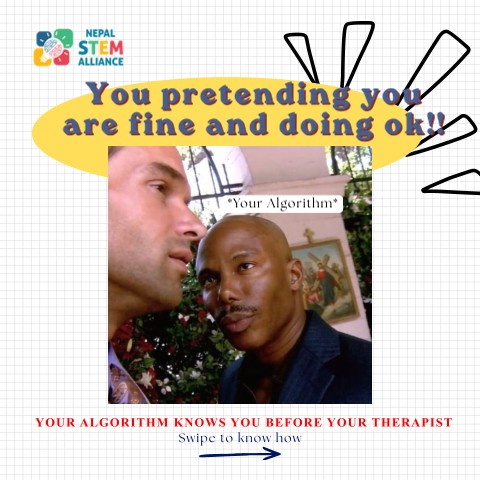
The Algorithm That Knows You Better Than Your Therapist
The algorithm already knew you were not.
The Algorithm That Knows You Better Than Your Therapist
Your therapist asks how you are feeling.
You say fine.
The algorithm already knew you were not.
It noticed three days ago. When you stopped opening the apps you usually open first thing in the morning. When your scroll speed slowed down on certain kinds of content. When you started watching videos all the way through instead of skipping. When the time between your last message and your reply started getting longer. When you began searching things at 2am that you would never say out loud.
Your therapist sees you once a week for fifty minutes.
The algorithm sees you every second you are online.
This is not science fiction. This is the business model.
Every platform you use is built on behavioral prediction. Not because companies care about your mental state but because your mental state determines what you click, what you buy, how long you stay, and how much you are worth to an advertiser. Emotion is data. Vulnerability is an engagement opportunity. The algorithm does not understand you. It has simply watched you long enough to predict you.
And prediction, it turns out, looks a lot like understanding.
Facebook's internal research showed their algorithm could detect depression before the person knew they were depressed. Spotify's data team can tell with uncomfortable accuracy when a relationship ends based on listening patterns alone. TikTok's recommendation engine does not need to know who you are. It just needs to know what you watched for more than three seconds and it will tell you more about yourself than you are ready to hear.
The unsettling part is not that the algorithm knows. It is how it knows.
It does not ask. It does not analyze. It does not care. It just observes patterns across billions of people and finds where you fit. You are not a person to the algorithm. You are a cluster of behaviors that resembles other clusters it has seen before. And those clusters are depressingly predictable.
Which means your most private moments — your 3am searches, your rewatched videos, your abandoned carts, your deleted drafts — are not private at all. They are training data. They are signals. They are being fed into a system that will use them to keep you scrolling a little longer, buying a little more, feeling a little more seen by a screen that does not actually see you.
The therapist cannot compete with that volume of data.
But the therapist can do something the algorithm cannot.
They can tell you the truth even when it makes you uncomfortable. They can refuse to give you what you want in the moment because they care about what you need in the long run. They can sit with you in silence without optimizing that silence for engagement.
The algorithm will always tell you what you want to hear.
Because that is what keeps you coming back.
And coming back is the only thing it was ever designed for.
About Nepal STEM Alliance
Book a STEM ProgramInspiring the Future of Innovation in Nepal
We empower youth, educators, and schools through hands-on STEM education, robotics labs, hackathons, and teacher empowerment programs.